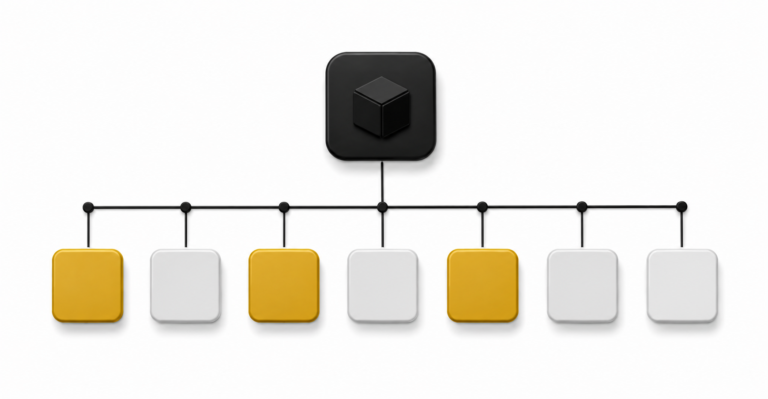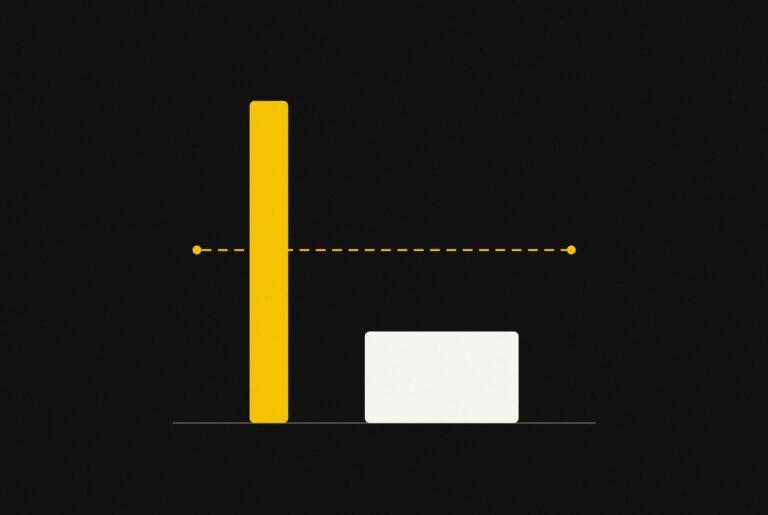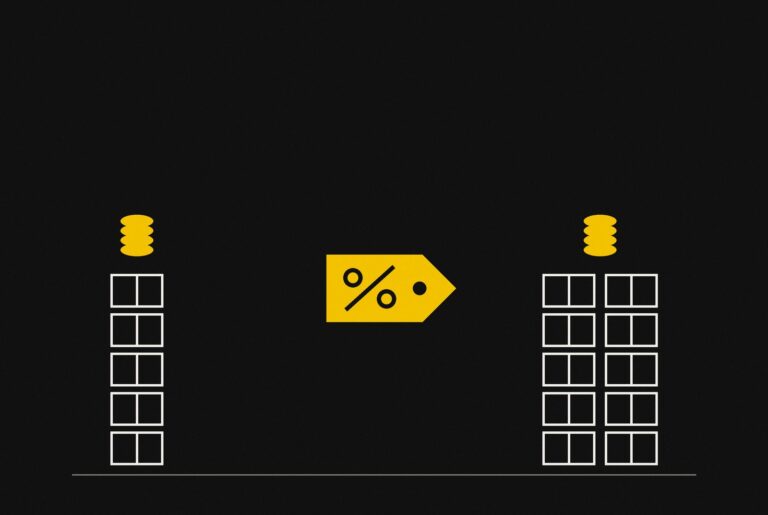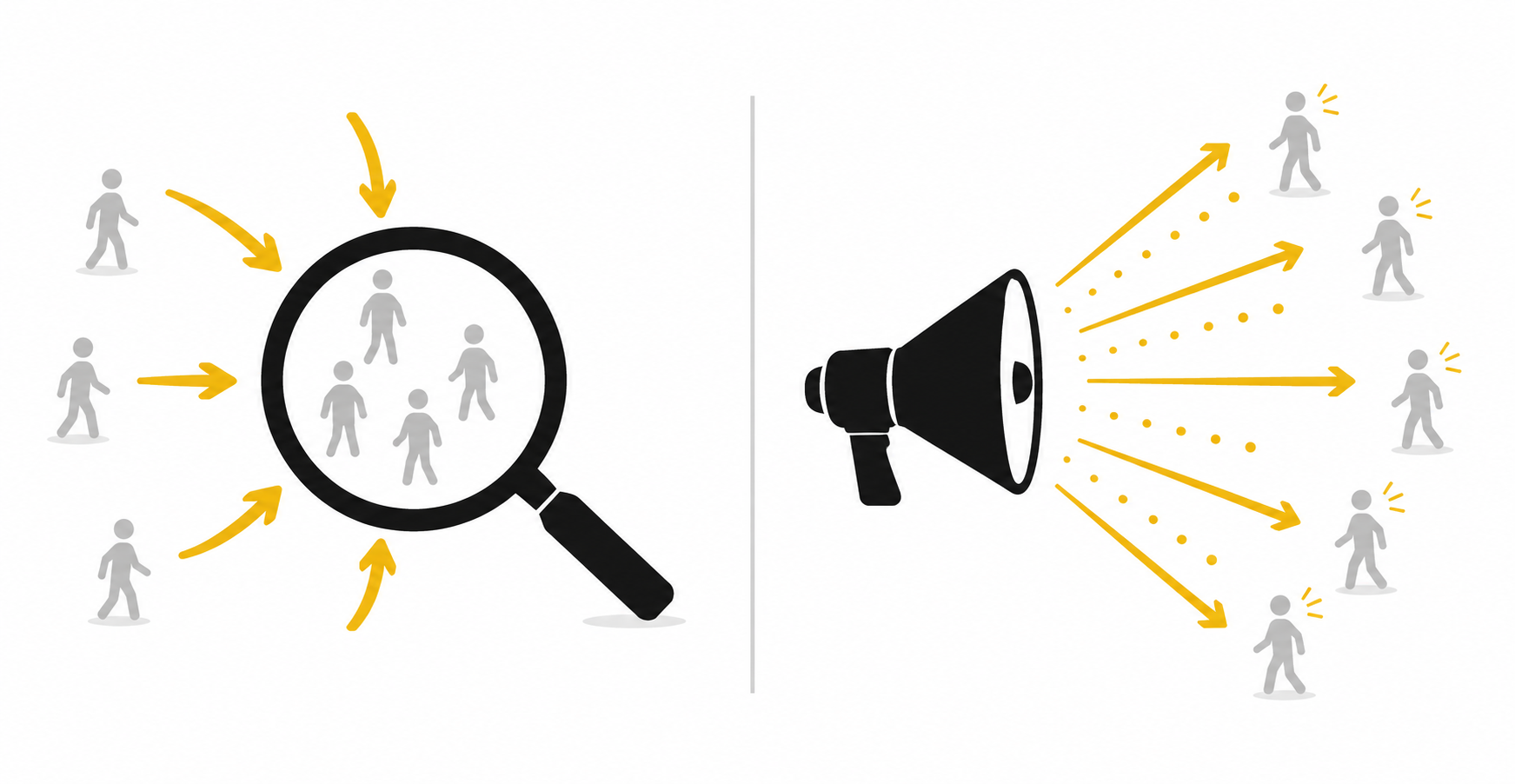
Google Ads and Facebook Ads do different jobs, so “which is better” is the wrong question. Google captures demand that already exists: people are searching for what you sell, and you show up. Meta introduces products to people who weren’t looking yet. If buyers are already typing your product into search, start with Google. If you’re putting something new in front of people who don’t know they want it, start with Meta. The platform isn’t the decision. Your demand is.
That single distinction settles most of the choice. The rest of this piece is the part the comparison guides skip: what each platform actually costs in the Australian market right now, where Google’s own products blur the line, the hidden cost of Meta in 2026, and the budget level below which running both is a mistake rather than a strategy.
The short answer: which should you start with?
Start with the channel that matches where your demand already sits.
If you sell something people search for by name or category (a replacement part, a plumber, a specific supplement, “ergonomic chair Melbourne”), Google captures that intent at the moment it appears. If you sell something people don’t search for because they don’t know it exists yet (a new product line, a category nobody’s named, a brand play), Meta puts it in front of the right audience while they scroll.
Most Australian ecommerce brands have both situations at once: a core range with existing search demand, and new products with none. That’s why the honest answer for a lot of businesses is “Google first, Meta as you introduce things,” not “both from day one.” Running both before you have the budget to feed each one properly gives you two underpowered channels instead of one that works. More on that threshold below.
Capturing demand vs introducing it: the real difference
Google Search is intent capture. Someone has already decided they have a problem, and they’re looking for a solution. Your ad meets a person mid-decision. The ceiling on that channel is the search volume itself: if 1,000 people a month search your category in your area, that’s the demand you can capture, and no amount of budget conjures more searches than exist.
Meta is demand creation. Nobody opens Instagram to buy your product. You interrupt them with something they didn’t know they wanted, and a good piece of creative plants the intent that Google later captures. The ceiling is much higher (the scrollable audience is enormous), but the conversion path is longer and the work is harder, because you’re manufacturing the want rather than answering it.
This is why the two channels feed each other. Meta creates the demand, someone later searches your brand or category, and Google catches them on the way to the checkout. A business running both well sees its branded search volume climb as Meta spend rises. That’s the loop, and it’s real. It’s also the reason measuring each channel in isolation misleads you, which matters when you get to budget decisions.
The quotable version: Google finds people already looking for you, and Meta finds people who should be looking but aren’t yet.
Where Google Ads wins, and the Performance Max complication
Google wins anywhere intent is explicit and immediate. Service businesses with “near me” and emergency searches (trades, locksmiths, after-hours medical, legal). High-consideration purchases where people research before buying. Replacement and consumable products with steady, nameable demand. If a person can type what they want, Google is built to be there when they do.
It also wins on speed to conversion. A search clicks through and buys in the same session more often than a social impression does. For a business that needs cash flow this quarter rather than brand equity next year, that immediacy is the deciding factor.
Here’s the complication nobody quoting the clean “Google equals intent” line tells you: Google isn’t pure demand capture anymore. Performance Max, now the default for a lot of ecommerce accounts, runs across Search, Shopping, Display, and YouTube from one campaign. The Shopping and Search portions capture intent. The Display and YouTube portions are demand generation wearing a Google label. So when you put budget into PMax expecting clean intent capture, a chunk of it behaves like Meta: upper-funnel, lower intent, harder to attribute. That’s not a reason to avoid PMax (it’s often the right structure for ecommerce, and the way it folds those channels together is covered in the Performance Max structure guide). It’s a reason to stop pretending the capture-versus-create line runs neatly down the Google/Meta border. It doesn’t. Google straddles it.
The trade-off with Google: you pay for that intent. CPCs are higher, sometimes much higher, because you’re bidding against everyone else who wants the same in-market buyer. The defence is that the buyer is worth more. A more expensive click that converts beats a cheap click that doesn’t.
Where Meta wins, and the creative-volume cost nobody quotes
Meta wins when demand has to be built. New product launches. Visually-driven or impulse purchases (apparel, homewares, beauty, food). Brand building where you need to be seen before you’re searched for. Anything where the audience is defined by who they are rather than what they typed. If your product photographs well and the buyer didn’t wake up looking for it, Meta is where it gets discovered.
It also wins on cost per impression and on raw reach. You can put your product in front of a precisely-defined audience for less than Google charges to answer a single high-intent search.
The cost the benchmark tables never show is creative throughput. Since Meta moved to its current automated, AI-driven delivery (the Andromeda-era system), the campaign no longer lives or dies on audience targeting. It lives or dies on creative volume. The algorithm needs a steady feed of fresh creative to test, and creative fatigues fast: run the same ad too long and frequency climbs, CTR drops, and your costs rise to punish you for it. So the real price of Meta in 2026 isn’t the CPM. It’s the production line. You need new creative weekly, sometimes more, and if you can’t produce it (or pay someone who can), Meta’s “cheap” reach quietly stops being cheap. This is the single most common reason Meta underdelivers for small Australian businesses: not the platform, the creative starvation behind it. Building that production process is its own discipline, and it’s the core of how a Meta ads consultant in Melbourne runs Meta as a complement to search, not a standalone bet.
The trade-off with Meta: lower cost per click, longer path to conversion, and a creative dependency that turns into a fixed cost. You trade Google’s “expensive but immediate” for Meta’s “cheap but you have to keep feeding it.”
What each platform actually costs in Australia
Anyone quoting you a single number is guessing. Cost varies by industry, competition, account maturity, and what you’re actually optimising for, and the spread is wide enough that one figure is close to meaningless. Here’s the range, and what moves you within it.
For Meta in the Australian market, 2026 benchmarks from WordStream’s Australia dataset (more than 8,400 local accounts) put average CPC near US$1.47 and average CPM around US$9.80, both up roughly 12% year on year. Read those as USD-normalised reference points, not your exact spend in Australian dollars. Australia sits mid-tier globally on Meta: cheaper per click than the US, more expensive than the UK. By industry the CPM spread runs from single digits for broad-appeal categories like food and apparel up to several times that for finance and insurance.
For Google Search, cross-industry CPC reached roughly US$2.96 in early 2026 (also up about 12% year on year), with ecommerce sitting lowest near US$1.16 and legal highest around US$6.75. Those are USD-normalised global figures, directional rather than AU-specific, so read them as the shape of the spread across industries, not as your number. The gap between Google and Meta is sharpest on lead generation, where Meta lead campaigns run far cheaper per click than Google Search lead campaigns, because Google is charging for the higher intent.
Three things determine where you actually land in those ranges, and they matter more than the benchmark:
Your industry’s competition. A trade in a contested metro is paying for the same clicks as every other trade in that metro. A niche product with few competitors pays a fraction of the category average.
What “cheap” actually buys. A below-benchmark Meta CPC is not automatically good news. Very low CPCs often mean the algorithm is dumping your ad onto cheap, low-intent inventory: plenty of clicks, almost no conversions. The benchmark is a diagnostic, not a target. Coming in under it can be a warning, not a win.
Cost per acquisition, not cost per click. The number that decides profitability is what you pay for a customer, not what you pay for a click. A $15 click that books a $600 job is excellent. A $0.50 click that converts nobody is expensive at any price. Most businesses that “can’t make Google work” are reading CPC and ignoring CPA. Reading those numbers correctly is most of what a real Google Ads audit checks.
So treat every published benchmark, including the ones above, as a reference point for whether your account is in a normal band, not as a forecast of what you’ll pay.
Should you run both? The data-sufficiency rule
The comparison guides almost all end with “use both.” It’s good advice for businesses that can afford it and bad advice for businesses that can’t, and nobody draws the line.
Here’s the line, and it isn’t a dollar figure, because the right number shifts with your CPCs, your margins, and what a customer is worth to you. The line is data sufficiency. Each channel needs enough monthly spend to exit its learning phase and then keep producing enough conversions for the algorithm to optimise against. Split your budget too thin and neither channel gets there. You end up with two campaigns permanently stuck in learning, each underperforming, and a blended result worse than putting the whole budget into one channel that had enough fuel to work.
So the working rule is about fuel, not a fixed spend. If your total budget can get one channel comfortably past its learning phase but not two, run one. Match it to your demand state (Google if intent exists, Meta if you’re creating it), get it profitable, then expand into the second channel once the first is carrying its own weight and you have surplus to push the second past its own learning phase. Run both only when each can clear that bar on its own. That’s when the full-funnel loop (Meta creating demand, Google capturing it) starts to compound.
This is the same logic behind not building infrastructure you can’t feed. A second channel with no budget to support it isn’t diversification. It’s dilution.
The trade-off, stated plainly: running both gives you reach and a demand-creation-to-capture loop, at the cost of spreading your budget, your attention, and your creative production across two systems. Below a certain spend, the cost outweighs the reach. Above it, the reverse.
How to choose: the ecommerce path and the lead-gen path
The right starting channel splits cleanly by business model.
For ecommerce and DTC brands. If you have a core range with existing search demand, Google (Shopping and Search, often via Performance Max) captures the people already hunting for those products. That’s your baseline, and it’s usually where the first dollars go because the intent is already there to harvest. Meta enters when you’re launching new products, pushing bundles or promotions, or building a brand people will later search for by name. The pattern that works: Google holds the floor on existing demand, Meta opens the ceiling on new demand. A brand selling one established product line with steady search volume can run Google alone profitably for a long time. A brand whose growth depends on launching new products will hit a wall without Meta, because there’s no existing search demand to capture for something nobody knows exists.
For lead-gen and service businesses. Intent is usually explicit (people search “emergency electrician,” “family lawyer Melbourne,” “commercial cleaning quote”), which makes Google the obvious first channel. The buyer is mid-decision and ready to act. Meta’s role here is narrower and comes second: retargeting the site visitors who didn’t convert, and reaching a defined local audience for services with a discovery angle (a new clinic, a fitness studio, anything where a compelling offer can create interest that wasn’t there). For a service business with strong “near me” demand and a tight budget, Google alone is often the entire correct answer until there’s surplus to spend on Meta retargeting.
The dividing question for either model is the same one from the top: does the demand already exist, or do you have to build it? Existing demand points to Google. Demand you have to manufacture points to Meta. The choice of bidding approach inside whichever channel you pick is a separate decision, walked through in the bid strategy framework.
How businesses pick the wrong one
Three failure modes show up again and again, and each one is the same mistake in a different costume: ignoring the demand state.
The “great engagement, no sales” Meta trap. A business runs beautiful Meta creative, racks up likes, shares, and reach, and books nothing. The product had existing search demand the whole time. The audience that would have bought was on Google typing the category, while the budget was busy buying applause on Instagram. Engagement metrics flatter the wrong channel.
The “Google is too expensive” exit. A business tries Google, sees a high CPC, panics, and quits before reading the CPA. The clicks were expensive because the intent was high, and the customers those clicks produced were worth far more than the click cost. They walked away from the channel that was actually working because they read the wrong number.
The “let’s do both” budget split. A business with $1,500 a month spreads it across Google and Meta to “cover all bases,” and neither channel gathers enough data to optimise. Both sit in learning, both underperform, and the owner concludes paid ads don’t work. They do. There just wasn’t enough fuel in either tank to find out.
Every one of these is avoidable by asking the demand question first and matching the channel to the answer.
When you can run this yourself, and when to bring in a specialist
You can run a single channel yourself, profitably, in a defined situation: one business model, a clear demand state, a single primary product or service, and the willingness to actually read CPA instead of CPC. A DTC brand with one established product line and steady search demand can run Google itself. A service business with strong local intent can run Search itself. The frameworks are repeatable and the weekly work is absorbable by a hands-on operator.
Where the maths changes: when you’re running both channels and need the full-funnel loop measured correctly across them, when creative production for Meta becomes a bottleneck you can’t staff, when Performance Max is spending into places you can’t see and can’t profitably exclude, or when the next 20% of performance depends on pattern recognition that takes years of managing accounts to build. Those are the points where a senior operator earns the fee, and where doing it yourself costs more in wasted spend than the help would.
If you’re trying to work out which channel your situation actually calls for, or whether your current split is the reason results have stalled, a 30-minute strategy call is the fastest way to get a direct read. If you’d rather have the existing account looked at first, the Revenue Leak Report does that against your real data.
Frequently asked questions
What’s the difference between Google Ads and Facebook Ads?
Google Ads captures demand that already exists: it shows your ad to people actively searching for what you sell. Facebook (Meta) Ads create demand: they put your product in front of people based on who they are, before they’ve started looking. Google answers intent, and Meta manufactures it.
Which is cheaper, Google Ads or Facebook Ads?
Meta usually has the lower cost per click, often well under half Google’s on a like-for-like basis, especially for lead generation. Google’s higher CPC reflects higher buyer intent, which frequently produces a lower cost per acquisition despite the pricier click. Cheaper per click and cheaper per customer are not the same thing.
Should I run both Google and Facebook Ads?
Only once you can fund both properly. The test isn’t a fixed dollar figure, it’s whether each channel gets enough monthly spend to exit its learning phase and keep producing conversion data to optimise against. If your budget can do that for one channel but not two, pick the one that matches your demand and commit. Run both once each can clear that bar on its own, and the demand-create-to-capture loop compounds.
Do Google Ads work for local Australian businesses?
Yes, particularly for service businesses with “near me” and emergency intent. When someone searches for a local service, they’ve already decided to buy, and Google puts you in front of them at that moment. It’s hard to beat for high-intent local demand.
Which platform is better for ecommerce?
Both, in sequence. Google (usually Shopping or Performance Max) captures people already searching for your existing range. Meta introduces new products and builds the brand that drives future branded search. Start with Google for existing demand, add Meta as you launch and grow.
Should I hire a specialist or run it myself?
Run it yourself if you have one channel, one clear demand state, and you read cost per acquisition rather than cost per click. Bring in a specialist when you’re running both channels, when Meta creative production becomes a bottleneck, or when Performance Max is spending where you can’t see. The guide on hiring a Google Ads specialist covers how to tell the difference.